Europe's pay-as-you-go pension systems rest on promises worth several times GDP, financed by taxes and debt that future workers have never agreed to. The only lasting solution is a gradual move to capitalisation and an end to the use of pensions as an electoral weapon.
Europe likes to present its welfare state as the crowning achievement of its social model. Pensions are the jewel in that crown, a promise that every worker will be looked after in old age regardless of what happens to the economy, demographics or public finances.
Yet this promise has a price that governments prefer to hide, and that price is growing faster than any economy on the continent.
According to Eurostat, the pension entitlements already accrued by European households in social insurance schemes have reached staggering levels.
In Spain they amount to about 500% of GDP, the highest in the European Union. Austria stands at 462%, Italy at 438%, Greece at 405%, France at 397% and Germany at 347%.
In most countries, almost all these entitlements are unfunded. There is no pool of savings behind them, only the expectation that future workers will pay higher contributions and taxes to honour commitments made decades earlier.
Only a handful of countries, such as the Netherlands, Denmark and Sweden, have a significant funded component.
This is the largest hidden debt in Europe. It does not appear in the official public debt figures that markets and Brussels monitor, but it is just as real for the young worker who will have to pay it.
Unforgiving arithmetic
The arithmetic of the pay-as-you-go model is unforgiving. In 2025 the European Union had just under three people of working age for every person aged 65 or over, an old-age dependency ratio of 34.5%.
The European Central Bank projects that ratio in the euro area to rise from 35% in 2025 to 51% in 2050 and 62% by 2100.
A system in which current workers pay current pensions cannot survive when the number of contributors shrinks and the number of beneficiaries keeps rising, unless the state fills the gap with ever higher taxes, ever more debt or both.
That is exactly what is happening. In Germany, contributions to the statutory pension insurance are no longer enough to cover benefits, and the federal budget will transfer 127.4 billion euros to the system in 2026, rising to 132 billion in 2027, the largest single item in the federal budget.
France spent 422 billion euros on pensions in 2025, 14.1% of GDP and almost a quarter of all public spending, and the system still ran a deficit of 5.1 billion euros.
The Conseil d'orientation des retraites projects that deficit to approach 32 billion euros by 2045 and exceed 92 billion euros by 2070 under current legislation. Instead of acting, Paris suspended its modest 2023 reform to weather a political crisis.
European governments have tried to patch the model with immigration, but the effect is negative
Spain is the most extreme case. The debt of the Spanish Social Security system has risen from 34,888 million euros in June 2018 to 136,176 million in July 2026, almost four times higher in eight years.
Social contributions now cover pension spending only until early October, according to the Instituto Juan de Mariana, and the rest of the year is financed with transfers and loans from the central government.
Meanwhile, the government has approved 141 tax and contribution increases since 2018, many of which also hit pensioners through the non-indexation of income tax brackets.
Pensioners are told their benefits are guaranteed while taxpayers are squeezed to keep the promise alive for one more year.
European governments have tried to patch the model with immigration, but the effect is negative. Newcomers in low-wage jobs make a net negative contribution today and accrue entitlements of their own tomorrow. Without higher productivity and wages, immigration postpones the problem rather than solving it.
The deeper failure is political. Pensions in Europe have become the most powerful electoral instrument in the hands of governments. Indexation rules are changed to win elections, retirement ages are frozen to calm protests, and reforms are reversed when they become inconvenient.
Every government promises more to the largest voting bloc and sends the bill to those who are too young to vote or not yet born. A system in which the benefit of a future pensioner depends on the electoral calendar of a minister is neither social nor secure.
There is a better model
There is a better model, and Europe already has it. Sweden reformed its system in the 1990s with broad political consensus, creating notional individual accounts and a fully funded premium pension in which 2.5% of pensionable earnings is invested in individual capital market accounts.
Total assets in the premium pension system reached around 46% of GDP by the end of 2025, and the default public fund, AP7 Såfa, has delivered an average annual return of about 11% since 2000.
The Netherlands is completing the transition of its occupational pensions to individual defined contribution accounts, with assets of 1.72 trillion euros held by its pension funds.
Countries where workers own their savings have pensions that grow with the real economy, not with the promises of politicians
Even Germany has taken a first step, approving on 16 October 2026 a state contribution of ten euros a month to an individual, capital-funded pension account for every child from the age of six.
The lesson is clear. Countries where workers own their savings have pensions that grow with the real economy, not with the promises of politicians.
Capitalisation turns workers into owners of productive capital, channels long-term savings into investment in their own economies, and makes each person's retirement independent of the next budget negotiation.
A real, finite and visible transition
A transition does not mean abandoning current pensioners. It means guaranteeing the pensions of those already retired and those close to retirement through the state budget, while young workers progressively move towards a mixed system with a minimum public pension and individual capitalised accounts that they own and can inherit.
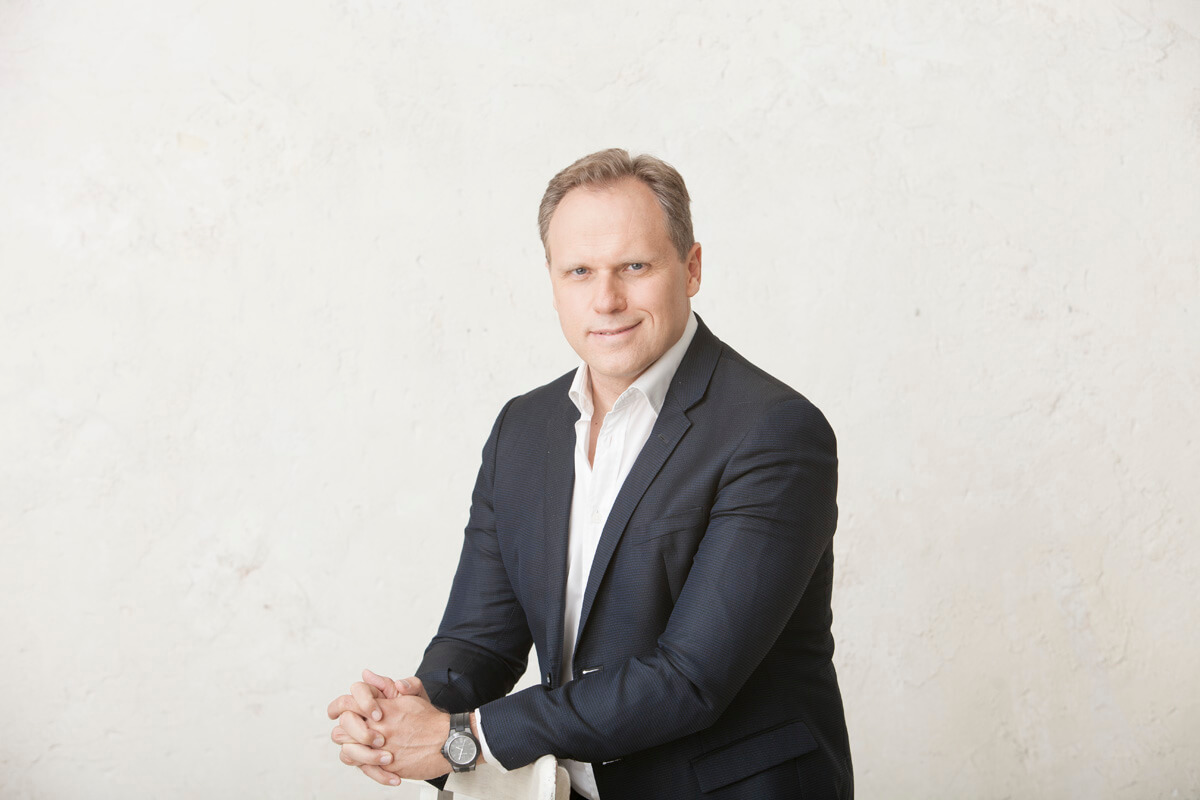 The cost of the transition is real, but finite and visible. The cost of doing nothing is unlimited and hidden - Daniel Lacalle
The cost of the transition is real, but finite and visible. The cost of doing nothing is unlimited and hidden, and it grows every year in the form of higher taxes, more debt and lower pensions.
Depoliticising pensions also requires transparency. Governments should publish accrued pension liabilities alongside official public debt, separate contributory pensions from non-contributory benefits financed by taxes, and establish automatic adjustment mechanisms linked to life expectancy and the contribution base, insulated from the influence of each electoral cycle. Sweden's balancing mechanism shows that this can work.
The welfare state is a promise that someone else will pay. When that someone else is a shrinking generation of young workers burdened by high taxes, precarious wages and expensive housing, the promise becomes a trap.
Europe can keep pretending that unfunded pensions are free, raising taxes and issuing debt until stagnation, inflation and social discontent force a brutal adjustment.
Or it can choose the path of Sweden and the Netherlands and give every worker ownership of their own retirement. The sooner it chooses, the less painful the transition will be.
