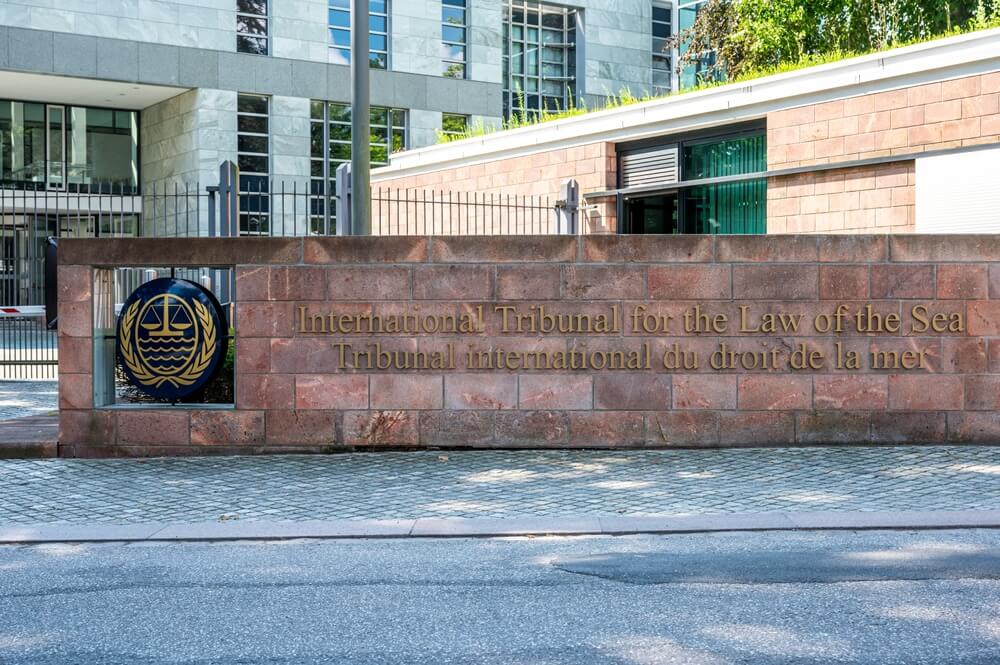
On 28 November in Hamburg, the International Tribunal for the Law of the Sea rejected, by 18 votes to three, Argentina's request to temporarily halt work on the Sea Lion oil field off the Falkland Islands, which Argentina calls the Malvinas. The decision is not final, however.
The dispute will be fully decided by a special arbitration tribunal, which is to be formed by January 2027. Argentina may again ask it to suspend work before 21 March 2027, when drilling could start at the earliest. In the meantime, Buenos Aires is exerting influence on the project outside the courtroom.
UK company Rockhopper, a partner in the project, announced on 20 November that two contractors had refused to work on it because of Argentina’s threat of sanctions.
The Falkland Islands are administered by the UK, and Argentina considers the islands and the surrounding sea to belong to it. Sea Lion is an oil field beneath the seabed, about 220 kilometres north of the islands, discovered in 2010. Falkland authorities approved a plan in December 2025 under which companies can drill wells and begin extracting oil under existing licences.
The project is led by the Israeli company Navitas Petroleum, which holds a 65 per cent stake, while the remaining 35 per cent is owned by the British company Rockhopper. Navitas states that it has no assets or operations in Argentina, so Argentine fines cannot directly affect it.
In September, however, Argentina brought criminal charges against several companies in the Navitas group and their executives over oil licences in the Falklands.
According to Navitas, the application had not been served on the company or its subsidiaries by 20 November. The situation is different for contractors who also work in Argentina: if they accept a job in the Falklands, they risk losing what they already have in Argentina.
Argentina may again seek a halt before drilling
Argentina has initiated arbitration against the UK under the UN Convention on the Law of the Sea, but the arbitral tribunal to decide the dispute has not yet been constituted. In such cases, the Convention stipulates that the permanent tribunal in Hamburg rules on urgent requests for interim measures.
The tribunal has decided only whether the work should be halted until the arbitral tribunal reaches a decision. Before doing so, it had to assess whether that tribunal would even have jurisdiction to hear this dispute.
At this stage, the tribunal only tentatively assessed jurisdiction and concluded that Argentina had not shown that the arbitral tribunal could hear this dispute.
That assessment does not bind the arbitral tribunal, which was constituted after Argentina initiated the arbitration and which will ultimately decide whether it has jurisdiction. The assessment from Hamburg, however, suggests that it might conclude that it does not.
The Convention covers disputes about the interpretation and application of its rules, not the question of which state a territory belongs to. All Argentine claims, whether relating to oil or to environmental protection of the sea, depend on whether the Falklands are Argentine or British, and this is not decided by the Convention tribunal.
Since jurisdiction was not established, the tribunal did not even consider whether suspension of the work was urgent. It added that the Convention also applies in disputed waters and that it expects both countries to comply with it.
The decision from Hamburg does not invalidate that order, because the Argentine court rules according to Argentine law
The UK government welcomed the decision and called on Argentina to end economic pressure on the islands. Argentine president Javier Milei said his government respects the decision and will continue to defend Argentina's claim to the islands through international law.
The UK confirmed before the tribunal that drilling would not begin before 21 March 2027, and oil extraction would not begin before March 2028. Milei's cabinet announced on 28 November that it would ask the arbitral tribunal, as soon as it is formed, to adopt measures to protect the rights that Argentina claims. Thus, the operators will contract the work until March without knowing whether the court will still temporarily halt it.
Argentina is also seeking to halt the project through its own courts. In September, a federal court in Río Grande ordered Navitas and Rockhopper to suspend the project, citing possible environmental damage and a violation of Argentina’s sovereignty.
Río Grande is in the province of Tierra del Fuego, to which Argentina, according to its law, also attributes the Falkland Islands. The decision from Hamburg does not invalidate that order, because the Argentine court rules according to Argentine law and its order remains in force in Argentina.
Argentina’s contracts add weight to the threat
The clearest example is the US oil-services company Halliburton. Argentina’s YPF awarded it a multiyear, multibillion-dollar contract in April to work at Vaca Muerta, a vast shale oil and gas field in the Neuquén province of Argentine Patagonia.
It is one of the largest such fields in the world, and the oil is extracted by hydraulic fracturing, precisely the sort of work companies like Halliburton specialise in.
The Argentine authorities then discussed with the company the application of relevant laws, the proposed penalties and the conditions for entering into contracts in Argentina.
On 2 October, Halliburton announced that neither it nor its subsidiaries would work on the Sea Lion project. It confirmed what the authorities had discussed with it, but did not disclose the decision-making process.
The rapprochement between Buenos Aires and Washington has fuelled debate about the US stance towards the islands, but Halliburton must maintain its contract in Argentina regardless of Washington’s position.
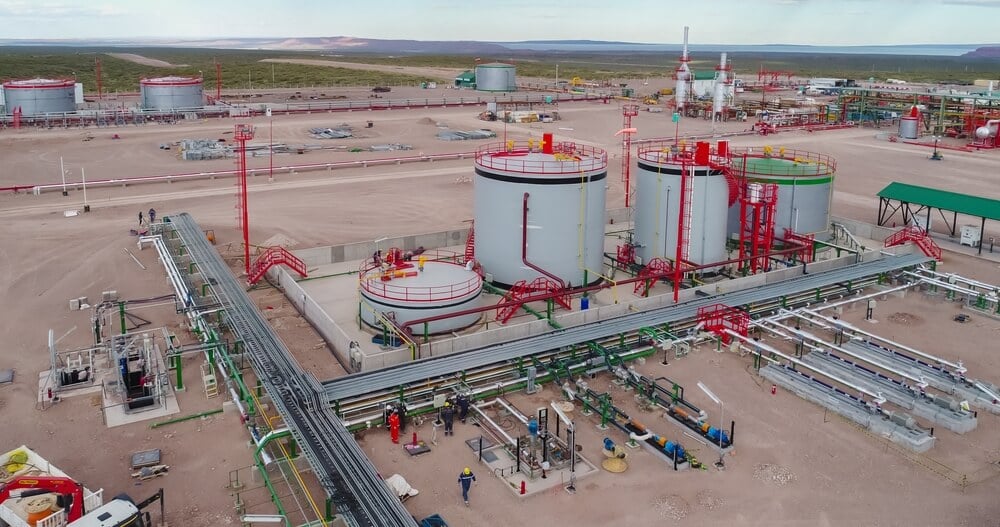 In September 2026, Vaca Muerta accounted for about 70 per cent of Argentina’s oil production and is the country’s largest oil project
, both for foreign contractors and for Argentina itself.
This dependence is mutual: Argentina needs these contractors to increase production, so fines against a large number of foreign suppliers would also narrow the options available to its own oil companies.
Argentine law provides that a company can be banned from doing business in Argentina for between five and 20 years if it explores for or extracts oil and gas on seabed that Argentina claims as its own, including the seabed around the Falklands, without an Argentine permit.
The same applies to companies that provide certain services to such operators. Punishment is imposed by a state body through an administrative procedure.
At the beginning of September, Argentine President Milei announced stricter measures against companies operating in the Falklands. In a decree published on 4 September, his government entrusted implementation of that law to the Ministry of Foreign Affairs and set out how the procedure should be conducted.
Applicants for Argentine oil licences and companies seeking tax and other incentives for major investments in Argentina must declare that they comply with these prohibitions. A company must therefore declare any business in the Falklands when it first requests something from the Argentine state, before any proceedings are initiated against it.
Since the end of October, the Chamber of Deputies, the lower house of the Argentine parliament, has also issued a committee opinion on a bill that would explicitly include suppliers of goods and services for oil operations without an Argentine licence. The proposal has not yet been adopted.
As early as September, Argentina launched 60 sanctions proceedings against companies and individuals from nine countries, including firms that run the operations, as well as shareholders, directors, suppliers and financiers.
The Ministry of Foreign Affairs also sent around 180 warning letters to companies and individuals in 30 countries. On the day of the decision in Hamburg, Milei’s cabinet announced that on 27 November five further proceedings had been initiated against funds that hold shares in Navitas.
Navitas changes contractors and maintains the production start deadline
Navitas states that replacing the two contractors that withdrew is already well advanced. According to the company, they breached their contracts by pulling out of work they had already accepted and thereby exposed themselves to potential claims for damages.
The contractors therefore preferred to risk a breach-of-contract dispute rather than face Argentine fines. Navitas has not released their names or announced legal action, and it cannot be determined from the published data whether Halliburton is one of them.
When the companies made their final investment decision in December 2025, Rockhopper estimated that $1.8 billion would need to be secured by first oil, of which $1 billion is covered by a loan for the first phase of field development.
London is primarily focused on defending its position on sovereignty in the dispute
Navitas still expects to receive the first funds from that loan at the end of the first quarter of 2027 and for production to begin in the first half of 2028. Back in October, Rockhopper warned Navitas that its assessment depends on a successful replacement and on whether other contractors also withdraw.
Residents of the Falkland Islands will see the greatest benefits from the project only once oil starts flowing. The islands’ authorities levy a nine per cent tax on production and a 26 per cent tax on taxable profit, with both revenue streams dependent on output.
Until then, the islands receive income only from leases, permits and jobs related to preparations. For the authorities in Stanley, the capital of the Falklands, the start of production is a budgetary issue, while London is primarily focused on defending its position on sovereignty in the dispute.
British support has limits
On 15 September, the UK government published guidance for companies doing business with the Falklands. It states that Argentina has no right to apply its laws to the islands or to companies that do business with them, and that there is no legal basis for courts outside Argentina to enforce Argentina's measures.
The government is ready to speak to companies facing pressure in other countries and to confirm this position directly, but it does not offer funding, legal representation or protection from decisions made by Argentine authorities.
 Argentina, even though it lost in Hamburg, can still make the project more expensive and narrow the choice of contractors
Companies threatened with action by Buenos Aires are advised to obtain their own legal advice. London therefore tells companies without operations in Argentina that they are not at risk of Argentine fines outside the country, while companies that do business in Argentina remain exposed. The Argentine Ministry of Foreign Affairs rejected the guidance on the same day.
Authorities in Stanley, which approved the field development plan, should ask Navitas to confirm whether it has contracted replacements for key roles and whether the timetable in the approved plan remains valid. On this basis, they can give citizens a realistic timeframe for oil revenues.
The UK and Argentina, for their part, need to agree on data sharing and joint action in the event of an oil spill, as a spill in the sea between the islands and the Argentine coast would affect both sides.
In a joint declaration in 1995, the two countries agreed to cooperate in protecting the sea during oil exploration in the south-west Atlantic, with an explicit statement that this did not alter either side’s position on sovereignty. Argentina withdrew from that agreement in 2007.
The same model can be used for a more limited agreement focused solely on spill response. The rationale already exists, as the Falklands authorities are publishing a local impact assessment and Argentina is contesting the project because of possible damage to the sea. Such a deal would address that objection without either side making concessions in the sovereignty dispute.
Navitas and Rockhopper are most likely to continue preparations and seek replacements among companies that do not have major operations in Argentina. There are relatively few such companies, so Argentina, even though it lost in Hamburg, can still make the project more expensive and narrow the choice of contractors.
